Where the land speaks and the spirit answers. Te ao wairua and te ao mārama — the world of spirit and the world of light — lived at once. These are films about seeing our own lives, and the sacred held inside them.
Nō hea koe? Where are you from? It is the first thing we ask one another — and a whole life can open inside the answer.
We make films so that people might go back to their own: their family, their struggle, the journey that carried them here — and come to know those stories as their own. And so that someone whose story we don't yet know might meet us with curiosity rather than judgement, and simply let us speak.
There is a richness in every person's story. We are here to honour it — Māori stories of survival and warmth and searching; my story, my father's story, our story; Rangi and Papa, as they are lived and have always been lived.
"Our hope is simple: that in the dark of the cinema, we might turn to the screen with tears, or a waiata, or a haka, and say: that is my story."
The whirlpool at the mouth of the ocean — where the physical and spiritual worlds are woven together.
"A ritual is the enactment of a myth," wrote Joseph Campbell. Like the Mass, like the whare tūpuna, a film can be that enactment — carrying us to a middle time, where the ancestors and the living stand in the same room. This is the water we work in: te ao Māori and the life of the spirit, turning together. Te reo Māori is not a subtitle here — it is the heartbeat.
We choose stories not for what glitters, but for what is true, what is needed, and what has waited a long time to be told.
Kaumātua guidance and community aren't brought in at the end — they are here from the first word. Cultural integrity is woven through the work, not added on.
The world we walk in, and the world of wairua that breathes through the land and our tūpuna — te ao mārama and te ao wairua, lived at once. Our stories live where those two worlds meet.
Māori stories, told from the inside, and held by the people whose lives, language and land they come from.
Waiōhau, 1960s. Three Māori boys cross a haunted stretch of road on a moonless night. Haka's courage is borrowed — the swagger of a cinema gunslinger he'll never be. But when the dark demands the real thing, borrowed courage fails. What he discovers in its place is older than any film he's ever seen, and it comes to him by breath and by contact, not by instruction.
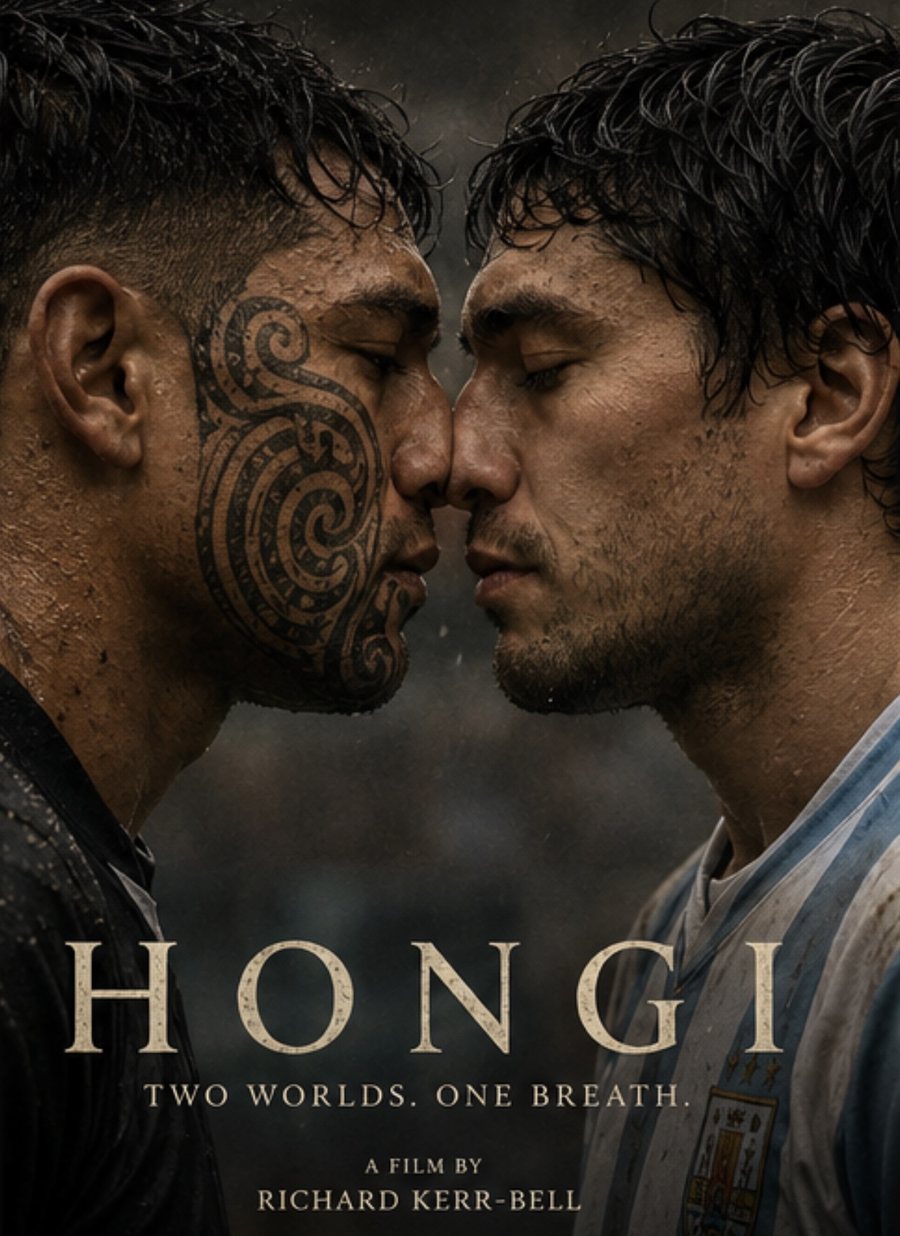
A Hokianga football coach inherits a whakataukī from his grandfather — that a real relationship can exist across oceans, held together by nothing more than a photograph and the will to believe it. The photograph is from Uruguay, 1967. The grandfather is gone. What the coach must decide is whether the old man was right — and whether he is willing to find out.
Aroha Alice Marupo fights her way into the men's professional game and is rebranded simply "Alice." The name is a contract. When her father's love — carried in a jar of shells from the shore of her childhood — finds her in the tunnel before the biggest game of her career, she has to decide what she is willing to answer to.
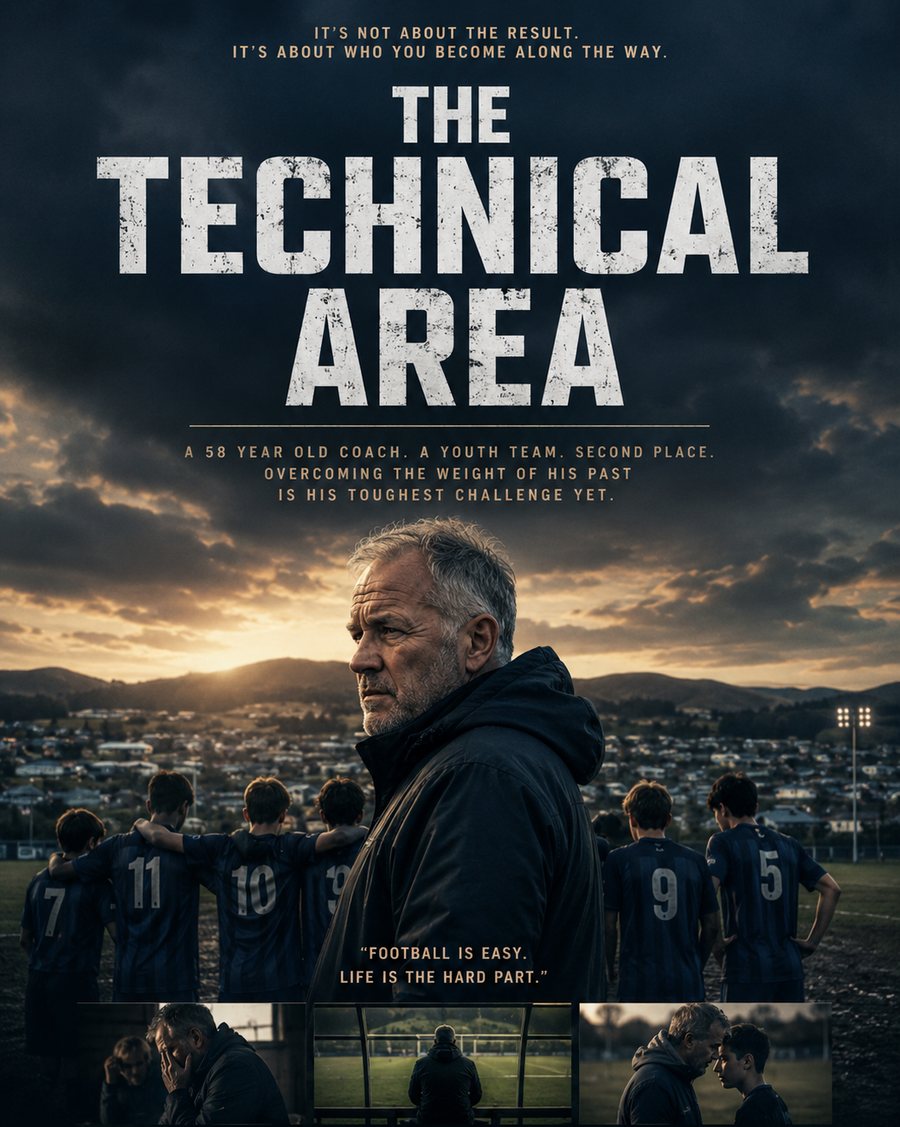
When a Kāi Tahu coach still unsure of his own identity at the wrong end of his career takes a last posting in Dunedin, he inherits a squad nobody wanted and a city that has stopped believing. What he builds is less a football team than a reckoning — with the city, with himself, and with the question of whether a man can finally come home to something he was never sure was his.
A botched extraction, a very wrong address, and New Zealand's most iconic footballer — who has absolutely no interest in being rescued. What was supposed to be a clean job becomes a cross-country fever dream in which three cousins discover that getting Ted is the least of their problems. Keeping him is the job. And Ted has opinions.
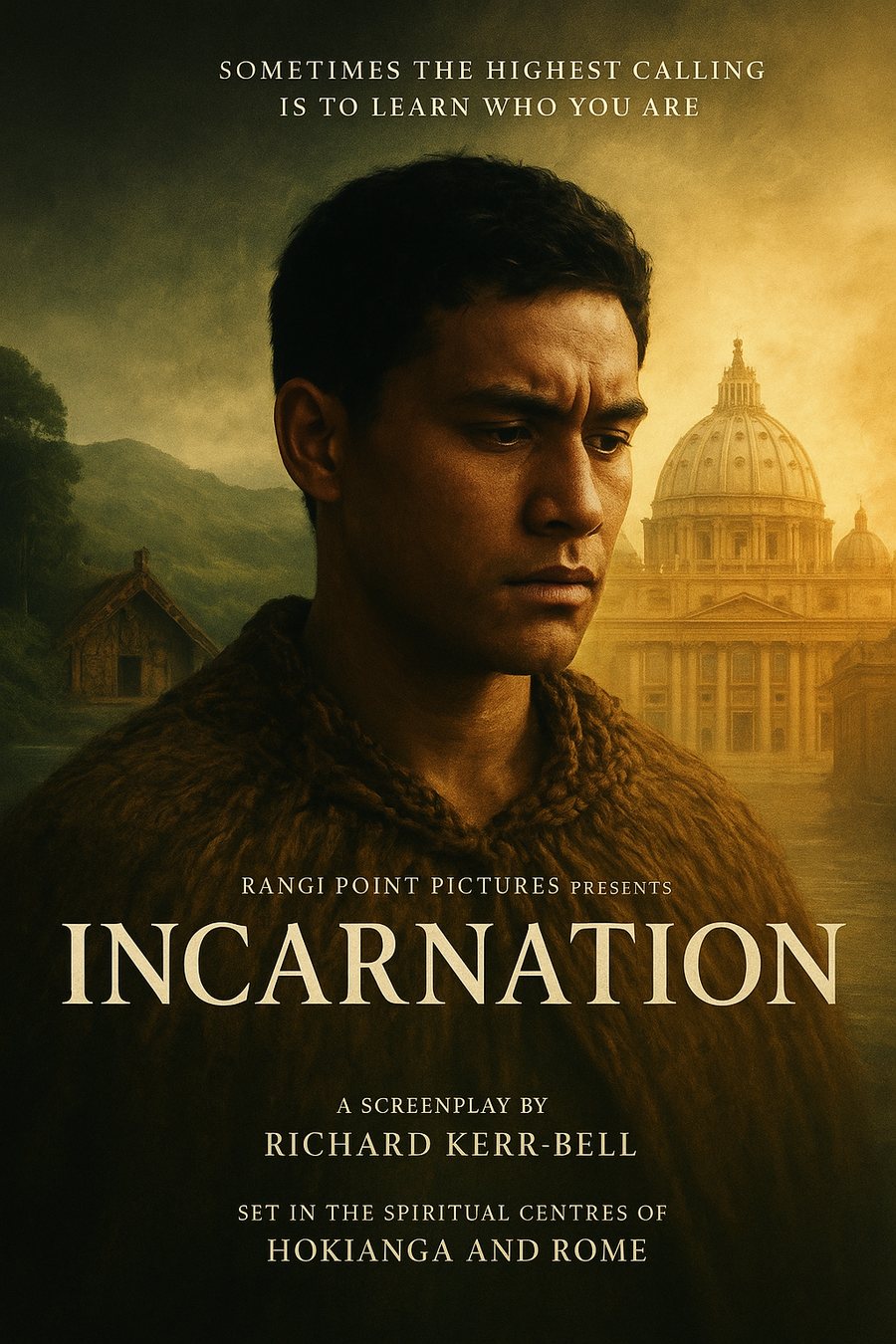
1859. A Māori youth is taken from the Hokianga by Bishop Pompallier to study for the priesthood at Rome's Pontifical Urban College. From the misted shores of home to the marble courtyards of the Church, he must wrestle with the collision of faith, culture and belonging — before he can find his way back.
"A film should carry a deep stillness and the moral fury of The Mission — but above all it must know whose land it stands on, and whose story it is telling. I'm looking for the story that has been waiting to be told, and the people brave enough to tell it with me."
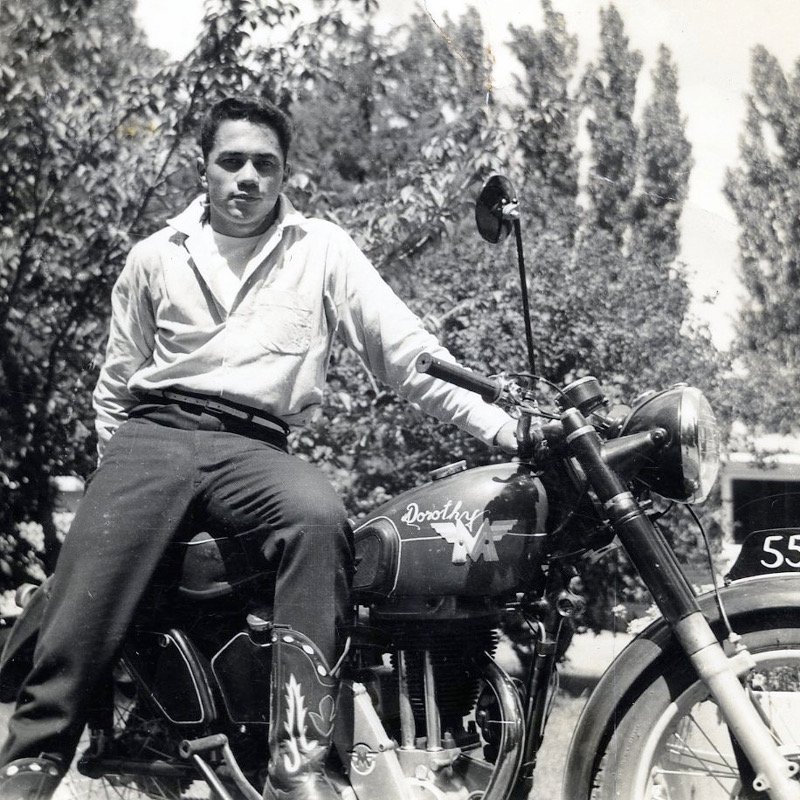
Rangi Point Pictures began with a son recording his father's stories. In writing Laurie's life — and the feature that traces that journey, All the Places in Between — Richard met a story of quiet struggle and a long fight for dignity, and knew it had to reach the screen.
Richard Kerr-Bell holds a PhD in Māori Catholic identity from the University of Otago, a Master of Counselling, and over a decade of experience teaching religious education, te reo Māori, and school counselling across Aotearoa's secondary schools. He lectures on Māori spirituality at Te Kupenga Catholic Theological College, and serves as Director of Mission at Sacred Heart College, Lower Hutt.
His published work includes From Rangi Point in Bare Feet — his father Laurie's biography — and the forthcoming scholarly text Being Māori, Being Catholic — E Kore e Piri te Uku ki te Rino, currently under review at Huia Publishers. He authored the Māori elements of Tō Tātou Whakapono — Our Faith, the new national Catholic RE curriculum, using conceptual rather than literal translation — protecting the integrity of te reo and allowing the gift of God's Spirit within Māori culture to speak with full force.
His board history includes roles at New Zealand Football, Wellington Phoenix FC, Otago Hockey, Te Kupenga Catholic Theological College, and Te Hau Ora. His 25+ years of football coaching experience, including senior Māori national team roles, gives the sport-centred films in the Rangi Point slate their authentic interior life.
The themes that drive his work — inheritance and courage, the land as witness, the meeting of Māori and Catholic worlds, what legacy parents leave their children — are not researched. They are known.
Te reo Māori is structural in every production — not deployed for authenticity, but because these stories live in it. Dialect, whakapapa, and register are held by the communities the films are set in.
Kaumātua guidance and community come first — before a camera is ever picked up, not after the edit. This is how the integrity of a story is kept whole.
Intellectual property stays with the people whose lives, language, and land are the story. Rangi Point Pictures works in partnership — never extraction. The story is found by listening, and it stays held.
If these stories speak to something you carry too — if you have your own story, or your people's, waiting to be told — we would love to hear from you. Nō hea koe? Tell us where you're from.